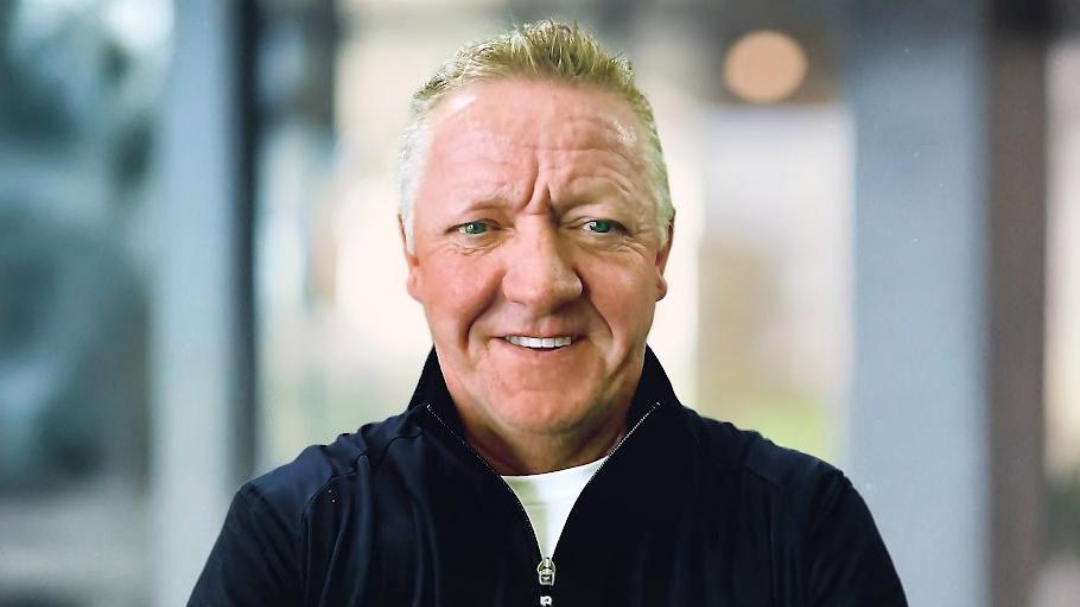
The Netty Awards are proud to feature an exclusive interview with Eamon McErlean, Vice President of Accessibility and Globalization at ServiceNow and one of the industry’s most influential voices at the intersection of inclusive design and enterprise technology. With a career that spans the trades, enterprise systems, accessibility leadership at some of the world’s most recognizable companies, and now a pivotal role at ServiceNow, Eamon brings a rare blend of technical depth, human-centered leadership, and mission-driven innovation. His work is helping redefine how accessibility is embedded into the future of AI, shaping standards that influence not just product design, but the broader digital ecosystem. In this conversation, he shares the journey that shaped him, the competitive advantages behind ServiceNow’s approach, and the trends that will define accessibility and AI in the years ahead.
Your Story: Every leader has a unique journey. Could you share a bit about your background, current role, and what moments shaped your career into what it is today?
Eamon: My path to leadership has been anything but traditional, you could say I took the road less traveled. After spending several years welding and working in the trades, I decided to go back to school and earn my BS in MIS from Barry University. My career began at Royal Caribbean as a PowerBuilder developer, where I built custom applications and fell in love with the technical side of the work—relational databases, creating efficiencies, and improving people’s day through smarter systems.
A few years in, I stepped into more managerial responsibilities, leading implementations across engineering, supply chain, and POS systems. Those experiences taught me one of the most important lessons of my career: you can manage tasks, but leadership is about bringing people together and helping them become a team. I’ve been fortunate to build exceptional, hand-picked teams, and I’ve always believed that a leader is only as strong as the people around them. That mindset ultimately inspired me to co-found Marine Software Solutions, where we focused on replacing manual, paper-heavy processes with integrated, intuitive digital solutions.
My journey continued at Apple, where I was introduced to accessibility in a deeper and more intentional way. That experience fundamentally reshaped how I viewed technology’s role in creating equity. I was fortunate to continue that accessibility journey at Nike, where I learned even more about the real-world impact inclusive design can have.
I joined ServiceNow in 2021, and while I’m grateful for everything I learned at RCCL, Nike, and Apple, I can genuinely say that ServiceNow has the best culture I’ve ever experienced. Our core value of being “Hungry & Humble” resonates deeply with me, and I feel truly fortunate to work with the incredible individuals on my team and across the company. ServiceNow is the place where I’m able to bring together everything I’ve learned—technology, leadership, accessibility, and a commitment to building products that work for everyone.
If there’s one theme that has shaped my career, it’s willingness: a willingness to work hard, to sacrifice, to double down, to admit when I don’t have all the answers, and to respect people at every level. My career has never unfolded exactly the way I expected, but every step taught me something essential. That collection of twists, turns, and opportunities shaped me into the leader I am today—and I’m deeply grateful for everyone I’ve learned from along the way.
Competitive Advantage: In a competitive field, what makes you and/or your company stand out? What unique qualities or approaches have contributed to your success?
Eamon: What sets us apart is our belief that accessibility and innovation belong together. Ten years ago, accessibility was often an afterthought, but with the rise of GenAI we have both an opportunity and a responsibility to ensure technology becomes an enabler for everyone. At ServiceNow, we’re focused on embedding accessibility into AI from the start—bringing people with disabilities into training data, evaluation, and decision-making early and consistently. The lift isn’t as heavy as people fear; most barriers come from uncertainty or concerns about etiquette. In reality, it’s about respect, partnership, and creating the space for participation.
We’ve built scalable mechanisms to make that possible, like our Accessibility Employee Panel Program, which brings employees with disabilities into multiple product phases to provide frequent, meaningful feedback at minimal additional cost. Programs like this break down stigma, increase awareness, and help teams build better, more inclusive products. And we’re seeing the impact across our RFPs, public-sector work, and customer engagements—accessibility isn’t just the right thing to do or a compliance check; it’s a competitive advantage.
On a personal level, what I bring is a commitment to listening and learning from every individual I work with. Diversity brings better ideas, better outcomes, and better technology. When you combine the right mindset with the right people and execution model, you create solutions that truly stand out.
Proudest Achievements: Is there a particular project or piece of work that you’re especially proud of? What made it stand out, and what impact did it have?
Eamon: One project I’m especially proud of is the AI Model Accessibility Checker, or AIMAC, which Joe Devon and I launched with the GAAD Foundation this year. As GenAI rapidly evolves, organizations need a way to understand whether large language models can generate accessible code by default—not just when prompted. AIMAC provides that accountability. It uses neutral, everyday prompts, evaluates the HTML output with the axe-core engine, and produces a weighted accessibility score aligned with WCAG 2.2 AA. Because it’s open source, customizable, and model-agnostic, it gives the entire industry a transparent and consistent way to benchmark AI behavior and push for higher standards.What makes AIMAC especially meaningful to me is the broader shift it represents. Accessibility was an afterthought for a long time, and now we have a chance to embed it into the foundation of GenAI rather than bolt it on later. This work not only elevates the quality of AI experiences but also demonstrates how technology can be a force for inclusion at scale.
Effective Tools and Tactics: What tools, strategies, or tactics have been most effective for your business in achieving its goals?
Eamon: One of the most effective things we’ve done is to shift left and really embed accessibility and inclusion into everything we do across the product development lifecycle. A key part of that is to include people with disabilities at every stage of development from early design discussions to final implementation. We have programs like a voluntary employee research panel and our product advisory council (PAC) that provide structured feedback to ensure accessibility is a shared responsibility, not an afterthought.
Another strategy that’s worked well is building strong, high-performing teams and a culture of trust. Leadership for me is about setting an example, having a clear vision, and making sure my team feels supported, appreciated, and empowered to speak up. We approach emerging technologies, like generative AI, thoughtfully. It’s not about perfection; it’s about making meaningful progress while keeping inclusion and human impact at the center of everything we do.
Future Vision: As 2026 approaches, what trends or challenges do you foresee for your industry? How is your company planning accordingly?
Eamon: As we head into 2026, one of the biggest trends I see is the continued rise of generative AI and the responsibility that comes with it. AI has incredible potential to be an positive enabler, but it also brings new challenges, especially around accessibility, ethics, transparency, and accuracy. If we don’t embed inclusion from the very start, we risk creating products that unintentionally exclude people with disabilities or reinforce biases.
At the same time, we’re seeing shifting expectations both internally and externally. Legislative demands like the European Accessibility Act, as well as evolving customer and partner expectations, are making it clear that accessibility can’t be treated as a checkbox, it’s a driver of innovation that strengthens usability for everyone and drives tremendous business value as a market differentiator. By embedding accessibility into our processes and culture, we’re not only creating more inclusive products, we’re also enhancing sales opportunities, strengthening our Platform’s usability, and demonstrating that responsible design and business success can go hand in hand.
Looking Forward
As the industry moves deeper into an AI-driven era, Eamon’s vision makes one thing clear: the future of technology must be inclusive by design. The push toward generative AI, rising global accessibility standards, and growing expectations from customers and partners all point to a world where accessibility is no longer optional—it’s foundational. ServiceNow’s approach, grounded in early involvement, transparent evaluation, and meaningful participation from people with disabilities, illustrates what responsible innovation can look like at scale. Eamon’s leadership shows that accessibility is not simply a compliance requirement, but a catalyst for better products, stronger teams, and more equitable digital experiences. Looking ahead to 2026 and beyond, the opportunity is not just to build more powerful tools, but to ensure those tools work for everyone—and leaders like Eamon are helping set that standard for the industry.